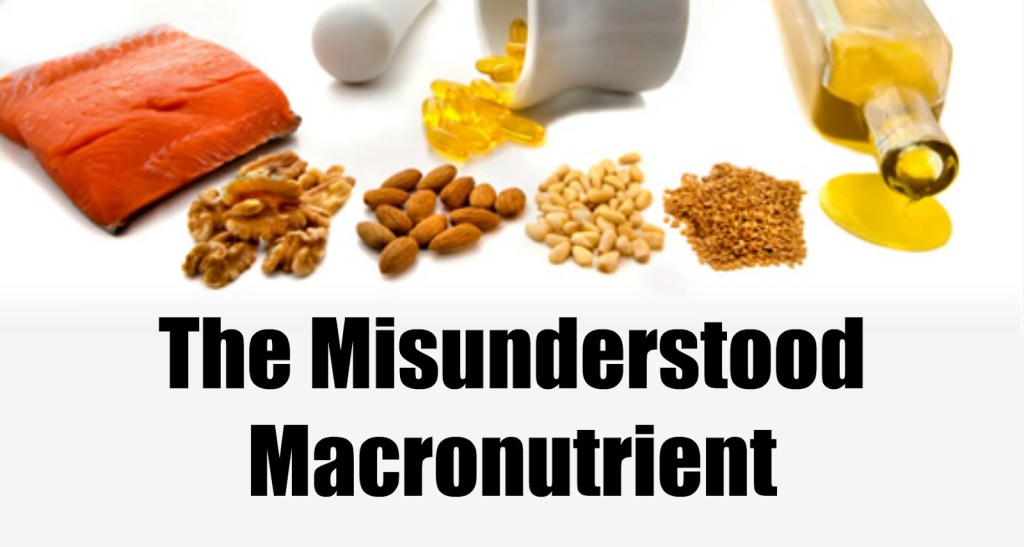
Fat is just a macronutrient like proteins and carbohydrates. But unlike the other macronutrients, fat is most commonly misunderstood and feared. Just because of its name, the common misconception among people is that by eating fat, we will get fat.
Protein and carbohydrates, both contain 4 calories per gram whereas fat contains 9 calories per gram. But just because it is more calorie dense than the other two, it does not mean that fat can actually make us fat.
Function of dietary fats in our body
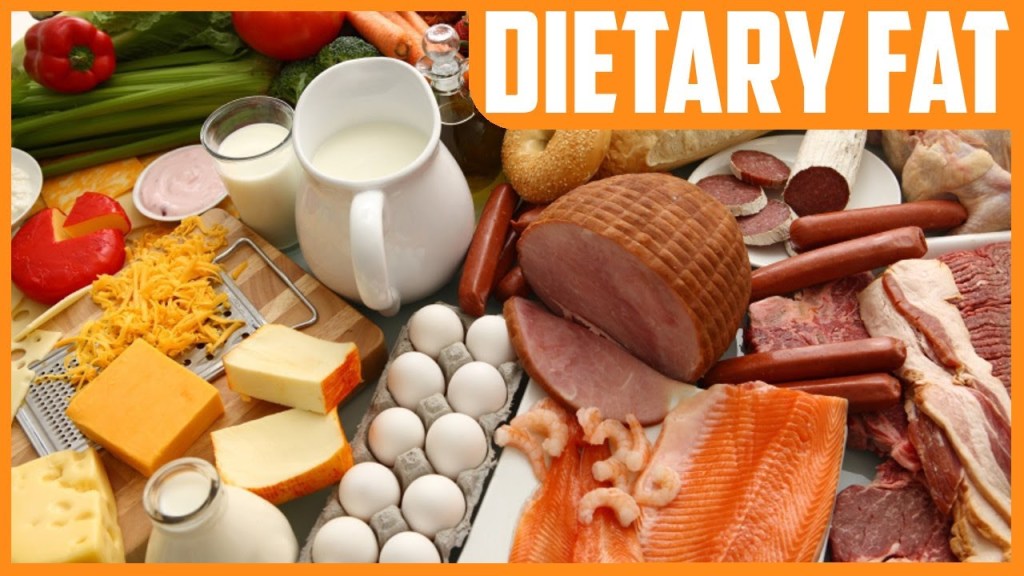
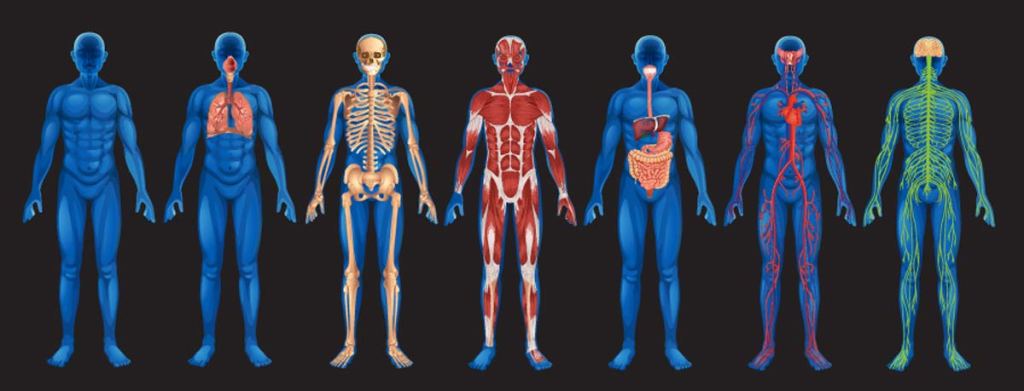
From a nutritional point of view, dietary fats are important for several health related aspects and for optimal functioning of the human body. Dietary fats are not just a source of energy; they function as structural building blocks of the body, carry fat-soluble vitamins, are involved in vital physiological processes in the body, and are indispensable for a number of important biological functions including growth and development.
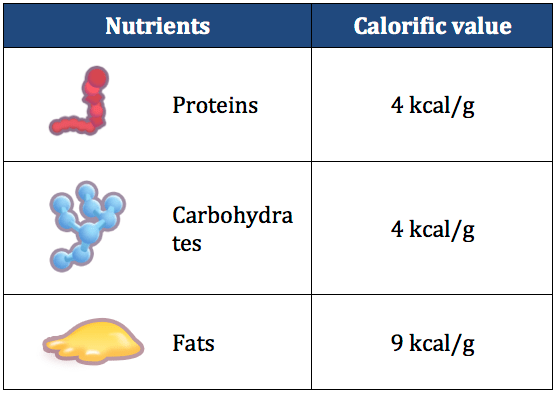
Provides energy– Fats are a source of energy in the human diet, together with carbohydrates and proteins, the other two main macronutrients. Fat is the most concentrated source providing 9 kcal per 1 gram consumed, which is more than double the energy content of protein or carbohydrate (4 kcal per gram) and more than quadruple the energy content of fibre (2 kcal per gram). Fat can be stored in the body’s fat tissue, which releases fatty acids when energy is required.
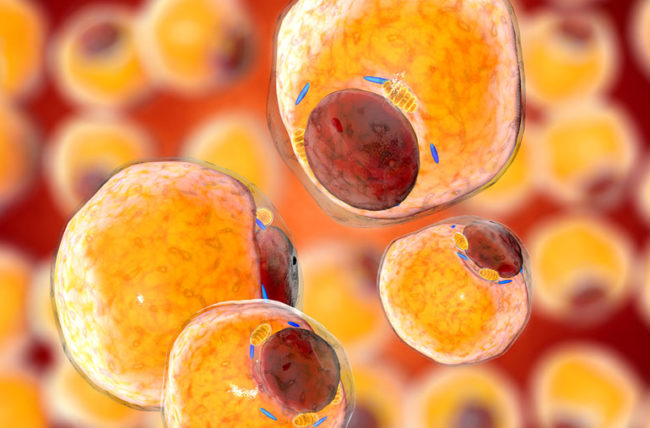
Structural Component– The membranes around the cells in our body physically separate the inside from the outside of the cell, and control the movement of substances in and out of the cells. They are mainly made of phospholipids, triglycerides and cholesterol.
Both length and saturation of the fatty acids from phospholipids and triglycerides affect the arrangement of the membrane and thereby its fluidity. Shorter chain fatty acids and unsaturated fatty acids are less stiff and less viscous, making the membranes more flexible. This influences a range of important biological functions such as the process of endocytosis in which a cell wraps itself around a particle to allow its uptake.
The brain is very rich in fat (60%) and has a unique fatty acid composition; docosahexaenoic acid (DHA) is the major brain fatty acid. The lipids of the retina also contain very high concentrations of DHA.

Acts as a carrier of vitamins– In the diet, fat is a carrier for the fat-soluble vitamins A, D, E and K, and supports their absorption in the intestine. Consuming sufficient amounts of fatty foods that contain these vitamins is thus essential for adequate intake of these micro nutrients.
Helps in other biological functions– essential fatty acids are involved in many physiological processes such as blood clotting, wound healing and inflammation. Also our bodies cannot produce the polyunsaturated fatty acids (PUFA) linoleic acid (LA) and alpha linolenic acid (ALA), without these essential fatty acids some vital functions would be compromised, thus they must be provided by the diet.
Good Fats V/S Bad Fats
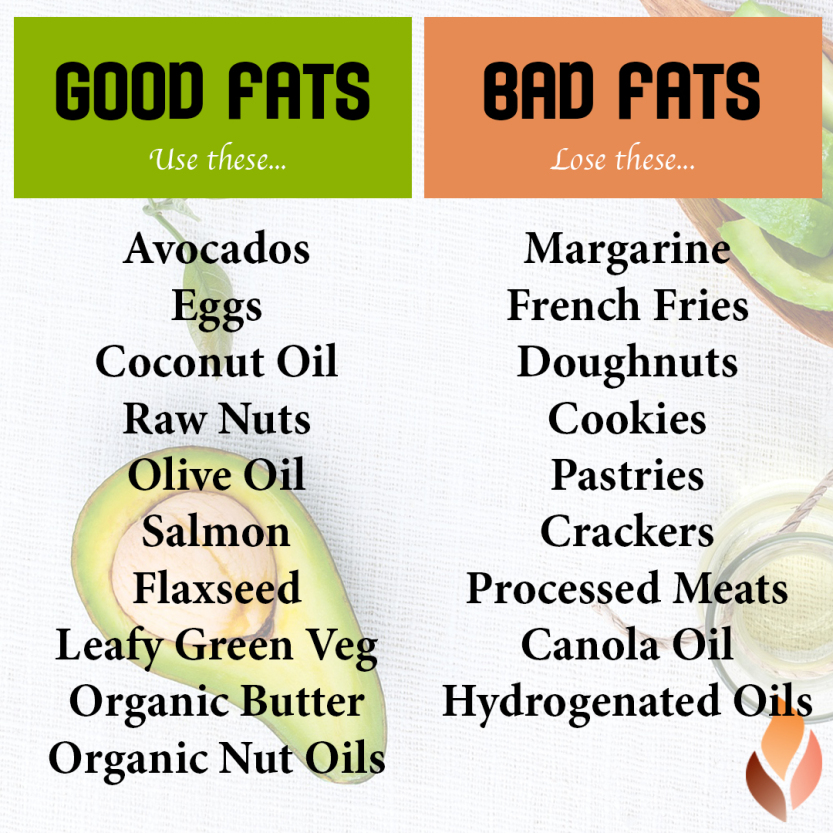
Unhealthy fats ( bad fats)
Saturated Fat– This type of fat comes mainly from animal sources of food, such as red meat, poultry and full-fat dairy products. Saturated fats raise high-density lipoprotein (HDL or “good”) cholesterol and low-density lipoprotein (LDL or “bad”) cholesterol levels, which may increase your risk of cardiovascular disease.
Trans Fat– This type of fat occurs naturally in some foods in small amounts. But most trans fats are made from oils through a food processing method called partial hydrogenation. These partially hydrogenated trans fats can increase total blood cholesterol, LDL cholesterol and triglyceride levels, but lower HDL cholesterol. This can increase your risk of cardiovascular disease.
Healthy Fats (Good Fats)
Monounsaturated Fatty Acids– This type of fat is found in a variety of foods and oils. Studies show that eating foods rich in monounsaturated fatty acids instead of saturated fats improves blood cholesterol levels, which can decrease your risk of heart disease and may also help decrease the risk of type 2 diabetes.
Polyunsaturated Fatty Acids– This type of fat is found mostly in plant-based foods and oils. Evidence shows that eating foods rich in polyunsaturated fatty acids instead of saturated fats improves blood cholesterol levels, which can decrease your risk of heart disease and may also help decrease the risk of type 2 diabetes.
Omega 3 Fatty Acids– One type of polyunsaturated fat is made up of mainly omega-3 fatty acids and may be especially beneficial for heart health. Omega-3, found in some types of fatty fish, appears to decrease the risk of coronary artery disease. Flax seeds are also a good source of omega 3.
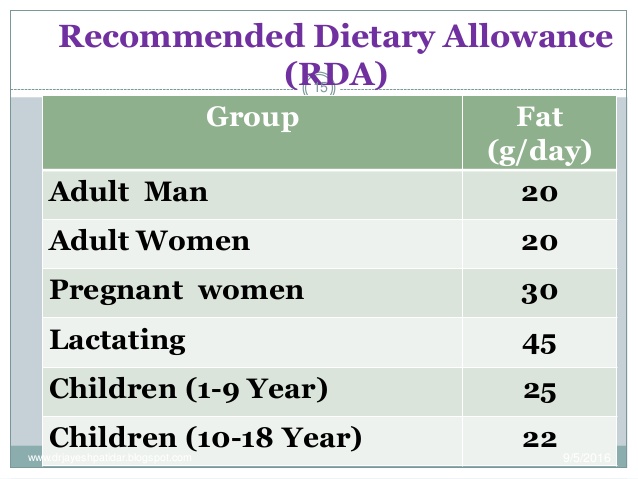
RDA (Recommended Daily Allowance) Of Fat
How to consume fats the right way
Since you have come to know about fats, their function and the good and bad fats, it is very important to know the right way of including fats in your diet.
In your diet, try to include good fats like avocado, natural peanut butter, olive oil, salmon, whole eggs and try to avoid consuming bad fats like hydrogenated oils, fried foods, refined oils etc.
Consuming fats surely increases number of calories as they contain 9 calories per gram but they keep you full for longer time too. You will only get fat when you consume more calories than you burn so it is important to keep a track on your caloric intake instead of blaming dietary fats alone.
 Health and fitness